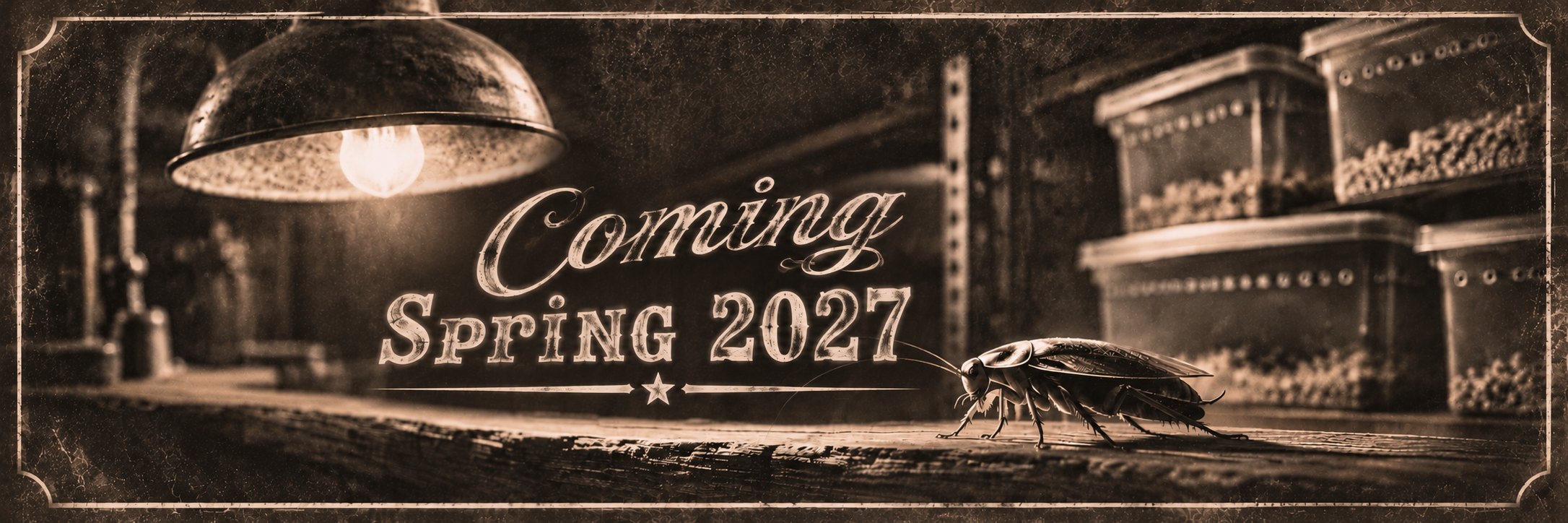
One Great Feeder. A Whole Lot of Hungry Mouths.
Whether you’re feeding a bearded dragon, a hungry gecko, an amphibian, or another insect-eating critter, finding a dependable source of quality feeder insects shouldn’t be an adventure.
Meet the discoid roach.
Discoid roaches (Blaberus discoidalis) are hardy, quiet, nutritious feeder insects suitable for a variety of animals when appropriately sized and included as part of a species-appropriate diet.
They’re easy to maintain, available in different sizes, and a practical choice for Florida keepers.
They’re cockroaches, sure.
But your animals aren’t judging the packaging.
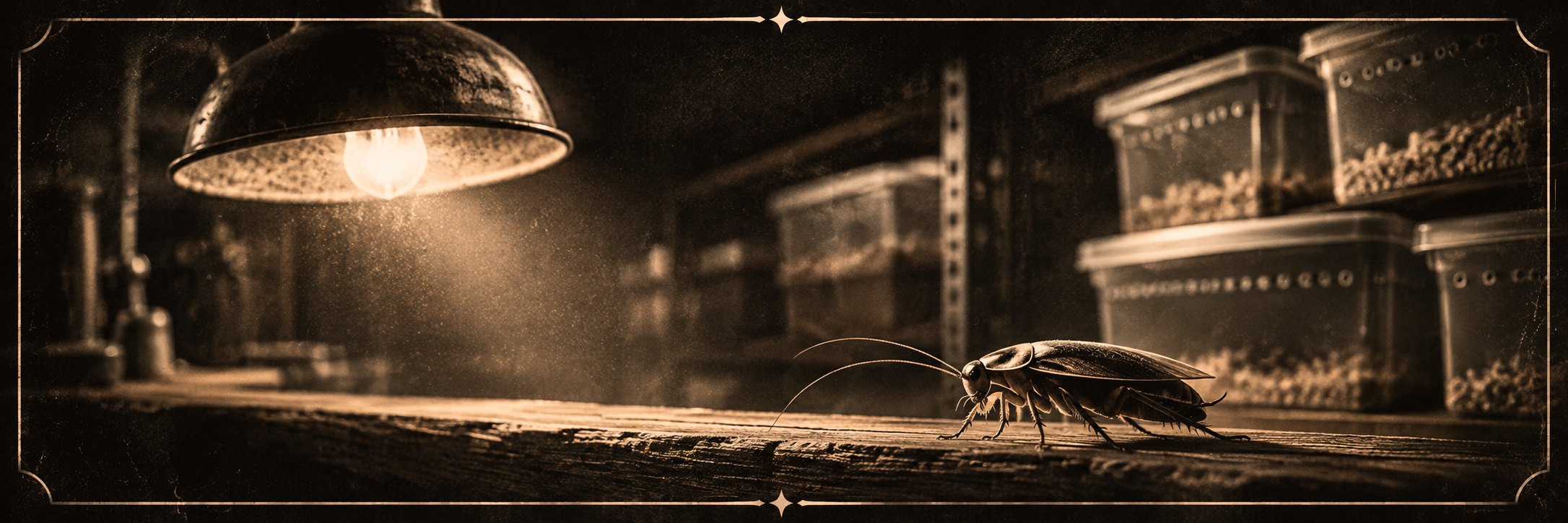
Less Fuss for You. A Good Meal for Them.
No chirping
Unlike crickets, discoids don’t chirp. No late-night concerts coming from your feeder container.
Can’t climb glass
Discoids generally cannot climb clean, smooth glass or plastic walls. Proper containers with secure, ventilated lids help keep your feeders where they belong.
Built to keep
With appropriate housing, temperatures, food, and hydration, discoids can be maintained for extended periods. That means less waste and fewer last-minute feeder runs.
They eat what you give them
Discoids readily consume suitable nutritious foods, allowing keepers to improve feeder quality through appropriate gut-loading practices.
Nymphs to adults
From small nymphs to full-grown adults, discoids offer a range of prey sizes for appropriately sized insect-eating animals.
Feet stay on the ground
Discoids don’t jump like crickets, making feeding and handling more manageable.
Not Just for Dragons.
Discoid roaches can be a suitable feeder for many insect-eating animals, depending on the species, age, size, and individual dietary requirements. The examples below are ones keepers commonly use. Your animal’s own care guide outranks this list.
Lizards, mostly
- Bearded dragons
- Leopard and crested geckos, when sized right
- Blue-tongue skinks
- Monitors and other insect-eating lizards
Frogs and toads
- White’s tree frogs
- Pacman frogs
- Toads
- Larger dart frogs, on the smallest nymphs
Eight legs and up
- Tarantulas
- Scorpions
- Mantids
- Centipedes and other predatory inverts
Beyond the terrarium
- Hedgehogs
- Sugar gliders
- Some insect-eating birds
- Larger aquarium fish, for some keepers
Not All Bugs Are Created Equal.
Every feeder has its place. Some are convenient, some are inexpensive, and some are exceptionally good at escaping into places you’ll never find them again.
Here’s how discoids compare with other popular feeder options.
| Feeder | Noise | Containment | Longevity | Storage & care | Sizes | Nutrition notes | Florida status |
|---|---|---|---|---|---|---|---|
| Discoid roach | Silent | Can’t climb smooth walls, can’t jump; winged adults don’t fly | Months as nymphs; adults a year or more | Smooth tote, egg crates, dry staple + produce; room temp holds them, warmth grows them | Small nymphs to 1.4–1.8″ adults | Trade reports treat them like dubia: good protein, moderate fat, soft-bodied as nymphs. Like most feeders, low calcium, so dust and gut-load. | Deregulated. No Florida permit. |
| Cricket | Chirps, especially at night | Jumps, climbs screen, escapes easily | Weeks; die-offs are common | Needs ventilation and frequent cleaning; smell builds fast | Pinhead to adult | Roughly 18% protein, 5% fat as fed; calcium is low, so dusting is standard. | Deregulated (house cricket) |
| Mealworm | Silent | Can’t climb; burrows | Weeks at room temp, longer refrigerated | Dry bran or oats; easy to store | Small to large larvae | Fattier (around 14% fat, 16% protein as fed); low calcium-to-phosphorus; more chitin per bite. | Deregulated |
| Dubia roach | Silent | Can’t climb smooth walls, can’t jump | Months to over a year | Same setup as discoids | Small nymphs to adults | Well studied: high protein, moderate fat, inverse calcium-to-phosphorus ratio (about 0.35 in nymphs) that a high-calcium gut-load can correct. | Restricted. Not on the no-permit list; non-native roaches need a Florida permit. |
| Superworm | Silent | Can’t climb; bites and burrows | Weeks to months; don’t refrigerate | Dry bran or oats, plus moisture from produce | Large larvae only | High fat, low moisture, low calcium; a treat-tier feeder for most animals. | Deregulated |
Florida status from the FDACS Division of Plant Industry feeder arthropod lists, July 2026. Nutrition figures are rounded as-fed values from the published literature (Finke 2002 and 2015; Barras et al. 2025). No lab numbers have been published for discoids specifically, so we don’t quote any.
Florida Has Its Own Rules.
Florida regulates the possession and movement of certain nonnative insects, which affects which feeder species can legally be kept, bred, transported, and sold.
Discoid roaches are an important feeder option for Florida animal keepers, particularly where other popular species, such as dubia roaches, face restrictions.
Winston’s Roaches is focused on raising discoids for the Florida market.
We believe Florida keepers deserve dependable access to quality feeders without having to search endlessly for a reliable supplier.
- Discoids
- Blaberus discoidalis is on the Florida Department of Agriculture’s deregulated feeder arthropods list (July 2026). No Florida permit is needed to keep, breed, buy or sell them within the state.
- Dubia
- Blaptica dubia is not on that list. Non-native roaches that aren’t deregulated need a state permit, and for pets that generally means adult males only.
- Shipping
- Moving feeders across state lines is a separate federal question (USDA APHIS PPQ 526). We’ll sort that out before we ship anywhere.
- Check it yourself
- FDACS arthropod permits · Feeder arthropod lists (PDF) · questions to DPI-Permits@FDACS.gov
Rules change. The current FDACS list is the final word, not this page.
Keep Them Comfortable Until Dinner.
There are two jobs here. One is keeping a bag of feeders alive and healthy for a few weeks. The other is running a colony that makes more. Most of the advice is the same; where it differs, we say so.
Smooth sides, real lid
A plastic tote or glass tank with clean, smooth walls. Discoids can’t climb those, but a secure, ventilated lid still goes on. Stack paper egg crates or cardboard on edge for hiding surfaces. Skip chemically treated cartons.
Room temp holds, warmth breeds
Ordinary indoor temperatures (about 70–80°F) keep feeders alive; they just grow slowly.
A dry staple plus produce
A ground, grain-based roach chow or similar dry feed as the staple, with fresh produce on the side: carrot, apple, orange, squash, leafy greens. Skip meat; it spoils fast and breeds bacteria.
No open water
Nymphs drown in a dish. Use water-absorbing crystals in a shallow lid, or let moist produce do the job. Keep the rest of the bin dry.
Spoiled food out, frass under control
Pull uneaten produce within a day or two. Check for mold and for the tiny mites that show up on old food.
Cup, tongs, lid
Scoop feeders with a cup or tongs and close the lid behind you. People who handle roaches a lot can develop allergies to them, so gloves and a ventilated room are smart for anyone running a colony.
From Tiny Nymphs to Full-Grown Adults.
Discoids grow through several nymph stages before reaching adulthood at roughly 1.4 to 1.8 inches, so one species covers a lot of mouths. The right size depends on the animal eating it, not the animal’s owner.
These are our planned size groups. Exact measurements arrive with our first inventory, before launch.
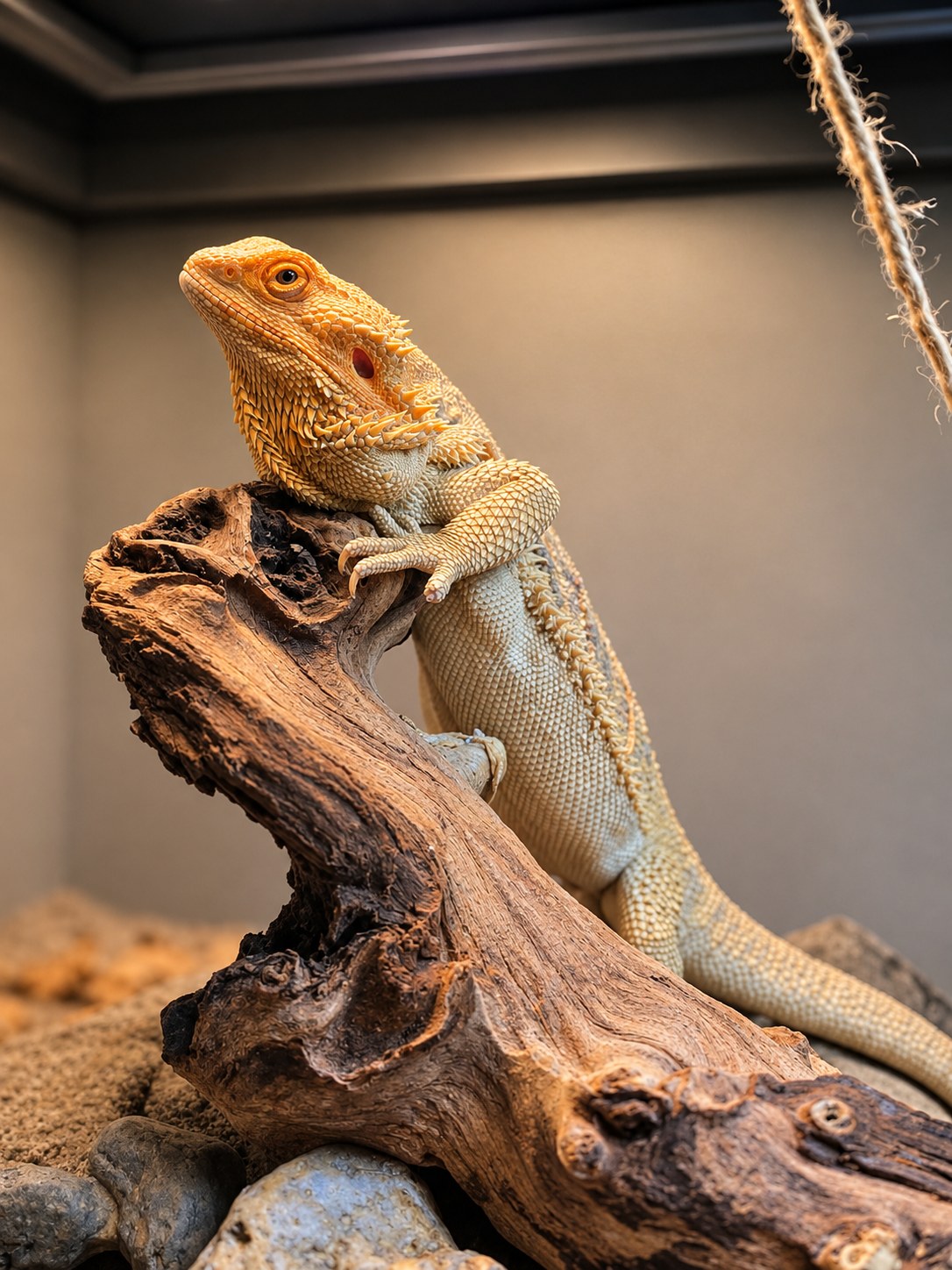
We Decided to Get Really Good at One Thing.
Winston’s Roaches didn’t begin with a warehouse, a business plan, or dreams of building a feeder-insect empire.
It began with one rescued bearded dragon, one hungry little mouth, and a frustrating search for dependable discoid roaches.
After finally finding a small supply, we started breeding our own.
One 50-gallon colony. Nothing fancy. Just food security for Winston.
But the more we researched, the more obvious the problem became.
If finding quality discoids was this difficult for us, how many other animal keepers in Florida were dealing with the same frustration?
So we decided to do something about it.
Today, we’re working toward expanding from one 50-gallon breeding colony to sixteen, with plans to grow considerably further.
Our mission is simple:
Provide Florida animal keepers, breeders, and wholesale customers with a dependable supply of quality discoid feeder roaches.
We’re not trying to breed every feeder insect imaginable.
We’d rather focus on one species and do it exceptionally well.
Winston approves of this business model, although he remains deeply suspicious of the inventory being sold instead of fed to him.
Good Things Take Time. Especially Breeding Colonies.
We’re expanding our breeding colonies and preparing to open for retail and wholesale sales in Spring 2027.
As our colonies grow, we’ll share updates on our progress, available feeder sizes, and future ordering information.
Whether you’re feeding one hungry pet or managing an entire collection of animals, we want Winston’s Roaches to become a supplier you can count on.
Join our launch list to follow our progress and be among the first to know when sales begin.